Choose decoration by artwork, fabric, desired feel and care performance. Embroidery, printing, transfers and embellishment create different surfaces. This guide helps fashion brands compare those choices and request a meaningful development quote.
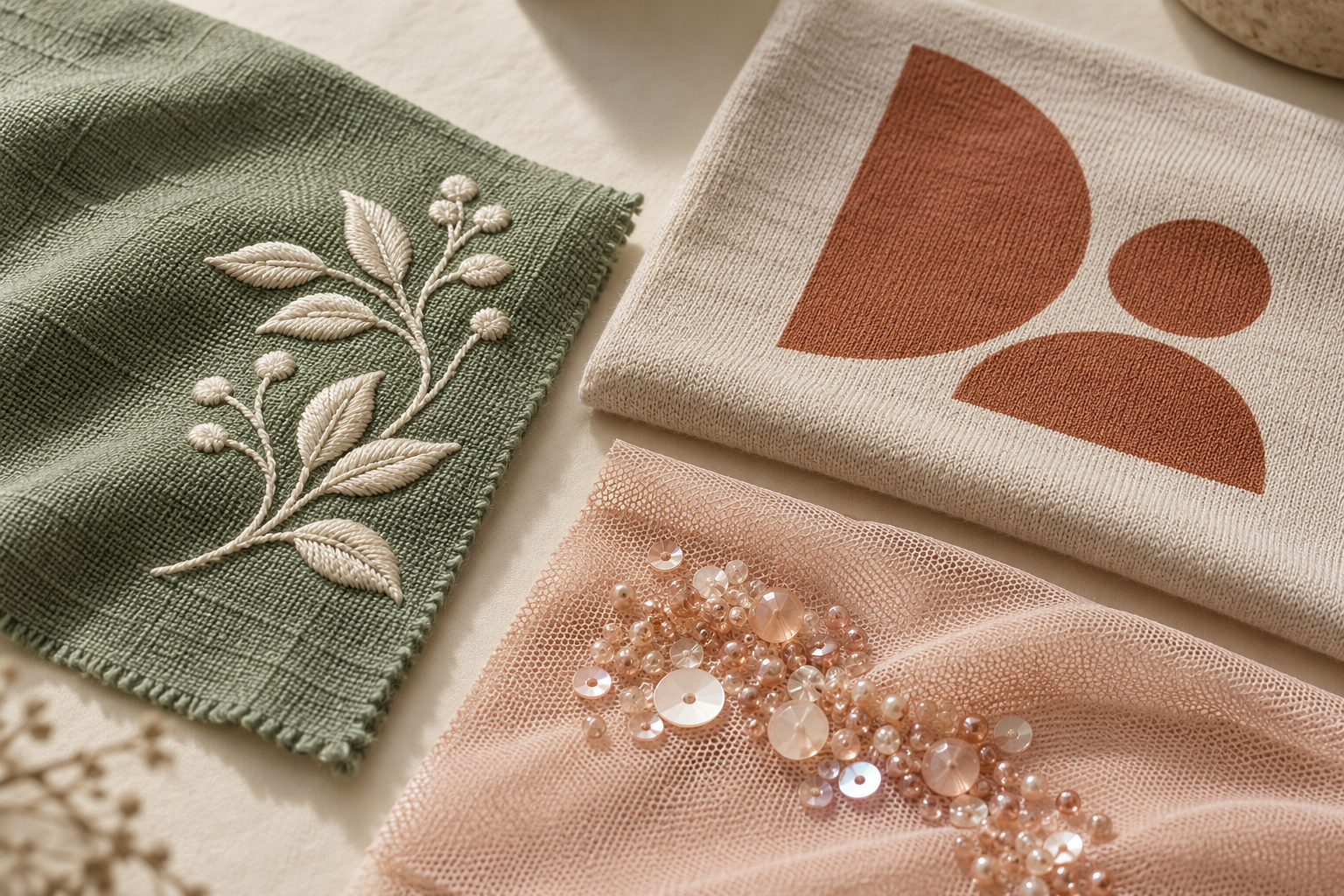
Printing, branding and decorative finishes
| Technique | Possible use | Important qualification |
|---|---|---|
| 11. HF welding / molded patch development | Selected thermoplastic components and dimensional branding. | HF welding and attaching a TPU patch are not the same operation. Confirm material compatibility and attachment method separately. |
| 12. Hotfix rhinestones | Heat-applied stones for decorative motifs. | Check adhesive, heat tolerance, attachment and care performance. |
| 13. Heat transfer vinyl (HTV) | Cut-film lettering, numbers or graphic elements. | Choose the film for the fabric and use its specified application process. |
| 14. Digital textile printing / DTG | Detailed printed designs using an appropriate digital process. | DTG is one digital route, not a synonym for all digital textile printing. |
| 15. Embroidery | Stitched logos, motifs and textured details. | Review digitization, density, backing, small lettering and fabric distortion. |
| 16. Screen printing | Graphic artwork printed through prepared screens. | Cost and finish depend on artwork, colors, ink system, setup and quantity. |
| 17. Beading / sequin embellishment | Decorative texture and sparkle for occasionwear or statement pieces. | Confirm whether attachment is by hand or machine, plus weight and inside comfort. |
| 18. Laser cutting | Precision cut shapes or decorative openings where suitable. | Edge sealing is material-dependent; test for fraying, discoloration and damage. |
| 20. Flocking | Short fibers applied to create a textured surface. | Review adhesive compatibility, coverage, shedding and care performance. |
How to compare embroidery, printing and heat transfers
Start with the artwork size, detail, placement and desired feel. Embroidery can create a raised texture, but dense stitching may distort a light base fabric. A print can reproduce a different surface effect, while a transfer introduces its own film or adhesive behavior. Approve the proposed method on the intended fabric.
Do not assume a method is suitable for every fiber. Brother’s polyester-printing guidance illustrates why pretreatment and printing systems matter. For heat transfers, Siser’s material finder similarly directs users to select products by substrate.
These references explain technical considerations; they do not mean YIMAN uses those suppliers or specific machines.
Send a complete artwork brief
Provide artwork files, dimensions, colors, placement and the intended base fabric. Ask the supplier to state setup costs, material requirements, process limitations and any minimum quantities. The cheapest option cannot be identified from the process name alone.
Approve decoration on the intended fabric
- Compare color, placement and feel with the agreed reference.
- Review distortion, adhesion or attachment as appropriate.
- Check the reverse side for comfort and finishing.
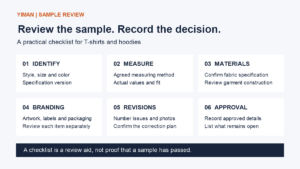
- Agree care and inspection requirements before bulk production.
Is every digital print DTG?
No. Direct-to-garment printing is one digital printing route. Confirm the actual system and its suitability for the fabric rather than treating all digital processes as interchangeable.
Discuss your project with YIMAN
YIMAN is a Guangzhou-based clothing factory established in 2011, focusing on custom dresses, T-shirts and hoodies through OEM and ODM services. Our general MOQ is 50 pieces per design, per color, with mixed sizes allowed. Specialist methods, materials and minimums require project-specific confirmation.
Request a project assessment or contact YIMAN on WhatsApp. Prepare your requirements using our quotation checklist.


Add comment