Choose a seam or edge finish by the fabric, garment movement and intended appearance. A neat inside finish is useful only when it also works with the material and construction. This guide helps brands specify joining, edge treatment and reinforcement for custom dresses, T-shirts and hoodies.
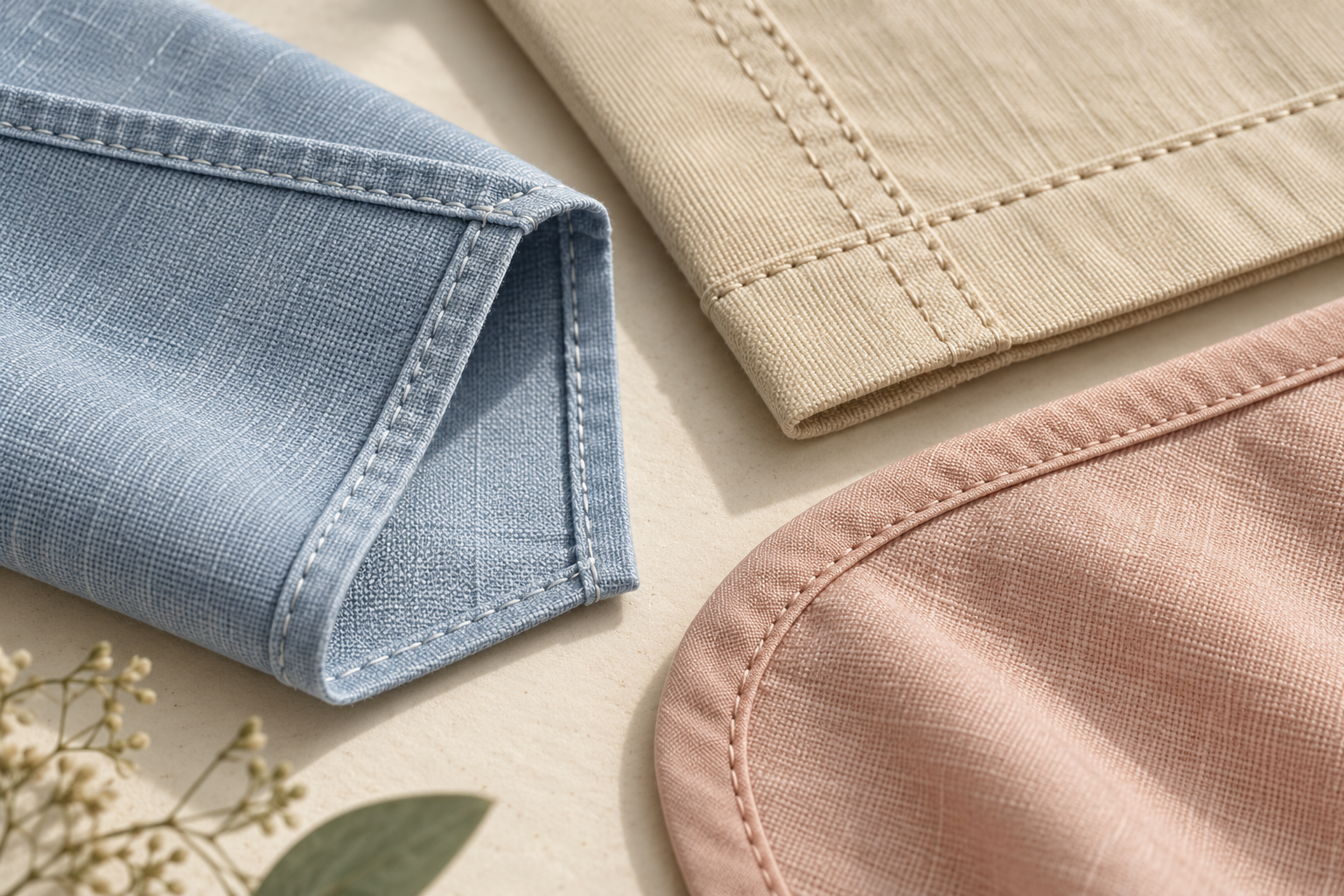
Seams, edge finishes and reinforcement
A seam describes how materials are assembled; a stitch describes the thread formation. The two terms are related but not interchangeable. Coats’ seam-type reference is useful when discussing construction with a supplier.
| Technique | Purpose and possible application | What to confirm |
|---|---|---|
| 1. Plain seam | A basic joining construction, often used in woven garments. | Seam allowance, stitch specification and how raw edges are finished. |
| 2. Overlocking / overedge stitching | Finishes edges; suitable stitch combinations can also join fabric layers. | Stretch, seam strength, coverage and appearance on the actual fabric. |
| 3. French seam | Encloses raw edges for a neat inside finish, often considered for lightweight woven garments. | Bulk, seam width and suitability for the shape and material. |
| 4. Topstitching | Visible stitching that may secure layers or create a design line. | Thread color, spacing from the edge, stitch length and alignment. |
| 5. Binding / bound edges | Uses a strip to enclose an edge or seam allowance. | Binding material, finished width, stretch and behavior around curves. |
| 6. Blind hemming | Creates a hem with limited visible stitching on the face. | Show-through, puckering and whether the finish suits the fabric. |
| 7. Bartacking | Reinforces selected stress points such as pocket corners or belt loops. | Placement, size and whether reinforcement damages or distorts the material. |
For a T-shirt or hoodie, discuss stretch and recovery instead of choosing a seam solely for its appearance. For a lightweight dress, inspect the inside finish and how seams look through the fabric. No single construction is mandatory for every garment.
Write a construction specification the factory can follow
Mark the seam location on a drawing and identify the required finish. Add thread color, seam allowance, visible stitching position and any approved reference. A process name alone may leave details open to interpretation.
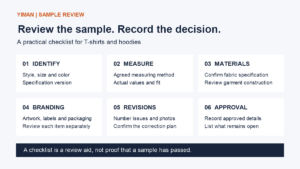
Check the sample inside and outside
- Look for raw edges, skipped stitches, puckering and excess bulk.
- Review seam behavior during movement and stretch where relevant.
- Check consistency at curves, junctions and reinforced areas.
- Agree measurements, tolerances and care requirements.
Is a French seam always better than overlocking?
No. The choice depends on fabric, shape, bulk and intended use. Compare representative samples instead of assuming one finish defines quality.
Discuss your project with YIMAN
YIMAN is a Guangzhou-based clothing factory established in 2011, focusing on custom dresses, T-shirts and hoodies through OEM and ODM services. Our general MOQ is 50 pieces per design, per color, with mixed sizes allowed. Specialist methods, materials and minimums require project-specific confirmation.
Request a project assessment or contact YIMAN on WhatsApp. Prepare your requirements using our quotation checklist.



Add comment