
Planning a Spring/Summer 2027 dress collection? Romantic details and slip-dress silhouettes offer useful starting points, but a production-ready collection needs more than a trend reference. Define the customer, fabric, opacity, fit and order quantities before committing to bulk manufacturing.
This guide translates current fashion discussion into practical sourcing decisions for independent brands. Trend forecasts are signals to investigate, not a guarantee of sales.
Why romantic dresses are worth watching for SS27
In its September 2026 forecast, Vogue Business identifies sheer romantic dressing, lace and softer silhouettes as directions for Spring/Summer 2027. Separately, Vogue Germany’s London Fashion Week coverage highlights the slip dress for the same season.
Our sourcing interpretation: brands can explore a focused dress capsule using lightness, texture or a fluid silhouette while adapting coverage and fit to their own customer. This is a collection-planning suggestion, not a claim about measured demand in your market.
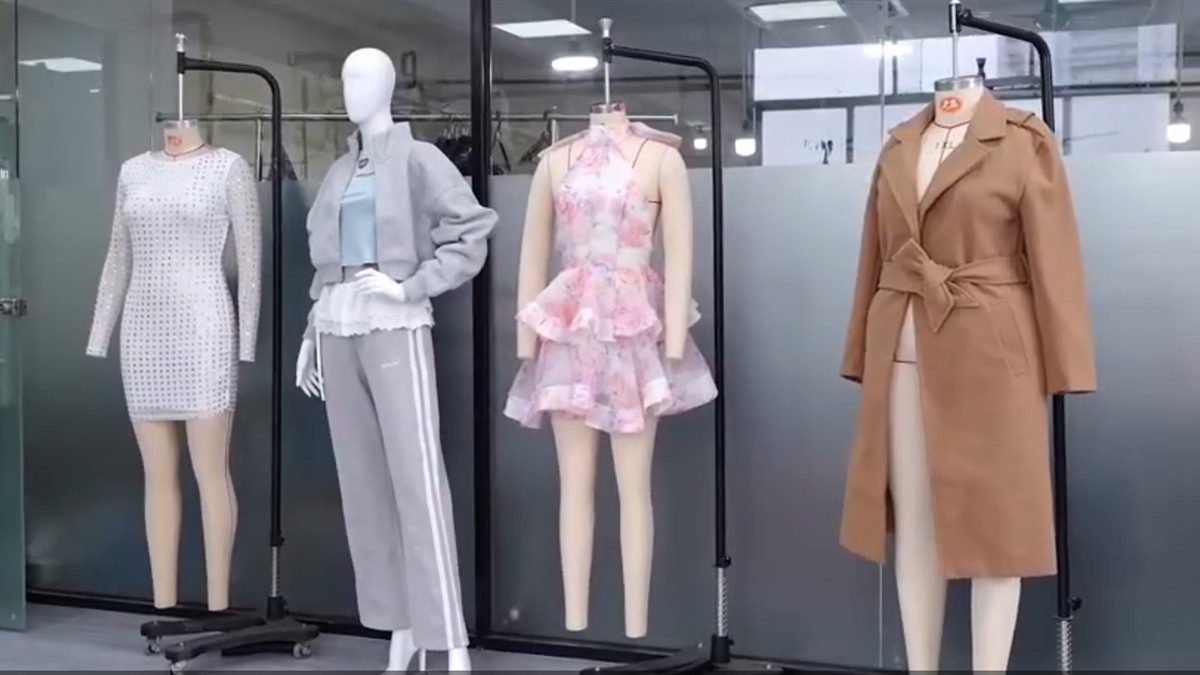
Translate the aesthetic into a clear product brief
| Direction to explore | Customer decision | Sampling check |
|---|---|---|
| Slip-dress silhouette | Occasionwear, layering or everyday styling? | Strap position, neckline stability, movement and fit |
| Sheer overlays | How much coverage does the customer expect? | Opacity in different lighting and lining placement |
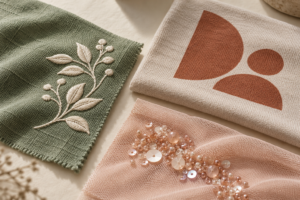
| Romantic texture or trim | Subtle detail or statement treatment? | Seam finish, skin comfort and trim attachment |
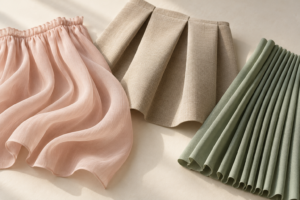
| Soft volume | Relaxed fit or a defined waist? | Balance, length and grading across sizes |
These are development options to discuss, not a list of materials or techniques automatically available at YIMAN. Request confirmation of sourcing, construction feasibility and minimums for your design.
Choose the fabric before promising the look
Two fabrics can look similar in a photograph but hang and behave differently. Share your desired composition, weight, stretch, surface finish and care requirements. If these are undecided, send a reference and request suitable alternatives.
For a custom slip dress, review drape and how seams behave in the proposed construction. For a sheer dress, specify the intended lining, coverage and wearing context. Check whether trim and lining colors work together in daylight as well as indoor lighting.
Do not label a material silk, organic or recycled without verifying the supplied material and any supporting documentation needed for that claim.
Plan a small dress capsule without multiplying inventory
Consider one design with a clear styling story before extending into multiple lengths or colors. A capsule collection can coordinate a few pieces; a limited clothing drop can organize release timing. Neither approach proves demand or reduces the factory minimum.
YIMAN’s MOQ is 50 pieces per design, per color, with mixed sizes allowed. One design in two colors requires 100 pieces. Two designs in two colors each require 200 pieces. Additional material or trim minimums should be confirmed for the project.
Use customer feedback, prior sales or a clearly described concept test to choose colors and sizes. Social engagement alone does not establish how many garments will sell. Read our 50-piece MOQ launch guide for quantity planning.
Approve a sample that represents the bulk garment
- Compare measurements with your specification and agree tolerances.
- Check fit while standing, sitting and moving.
- Review closures, straps, seams, hems and lining.
- Assess opacity and decoration on the intended materials.
- Confirm grading requirements and whether additional size samples are needed.
- Record revisions and keep a final approved reference sample.
Ask the supplier to identify any substitute sample materials and confirm the final bulk specification. For care performance or formal testing, agree the method and acceptance requirements before production.
Make the season work for your market
Use SS27 as a design-planning reference rather than a universal selling calendar. Discuss destination, launch date, weather and customer preferences for each market. A European spring launch and an Australian or New Zealand launch may need different delivery timing and merchandising.
For any market, including the UAE, ask your customers what coverage and occasion requirements matter instead of assuming a single preference across the whole country.
Build a realistic sampling and delivery schedule
YIMAN states 7–15 days for samples and 10–25 days for bulk production. Confirm when each period begins, whether it means working or calendar days, and how material availability or revisions affect the schedule. Allow separately for inspection and shipping.
Send design references, fabric requirements, quantities by design and color, size breakdown and destination. Use our custom clothing quotation checklist to compare complete offers.
Frequently asked questions
Are romantic dresses guaranteed to sell in 2027?
No. Editorial trend coverage can inform development, but your customer, price, fit and launch plan determine whether a concept is commercially suitable. Test the idea before scaling.
Can I mix sizes within a 50-piece order?
Yes. YIMAN allows mixed sizes within the minimum of 50 pieces for each design and color.
Does YIMAN offer every lace or sheer fabric?
Availability must be confirmed. Share your material and design references so the team can discuss feasible options and project terms.
Develop your custom dress collection with YIMAN
Established in 2011, YIMAN is a clothing factory in Guangzhou, China, providing OEM and ODM services for men’s and women’s collections, focusing on dresses, T-shirts and hoodies. Customization options include fabric, style, color, size and logo.
Request a project-specific dress quotation or discuss your collection on WhatsApp. For more sourcing guidance, see our custom dress manufacturing guide.


Add comment